
Where Veyn Begins
Why Veyn Sources From One of Europe's Last Wild Herb Regions
A brand can claim "sourced from Europe" on a label without saying much at all. Veyn's version of that claim is a forty-thousand-hectare relationship with one region, one family-run producer, and a way of working most of the industry gave up on decades ago.
Veyn's botanicals come from a family-run producer in Poland's Podlasie region, founded and still run today by Miroslaw. He learned to gather herbs as a child from his grandmother, studied agriculture in Warsaw, and has spent 36 years building one of the most exacting herbal supply chains in Europe, organic for 32 of those years, long before organic carried the weight it does now.

"Even after thirty-six years of doing this work, I still feel as though I am only beginning," he says. "Every year brings something new to learn." Behind that quiet humility sits sixty-five hectares of organic farmland and forty thousand hectares of certified forest, a scale most producers never reach because they don't stay this patient this long.
A Region That Grows Less, and Means More
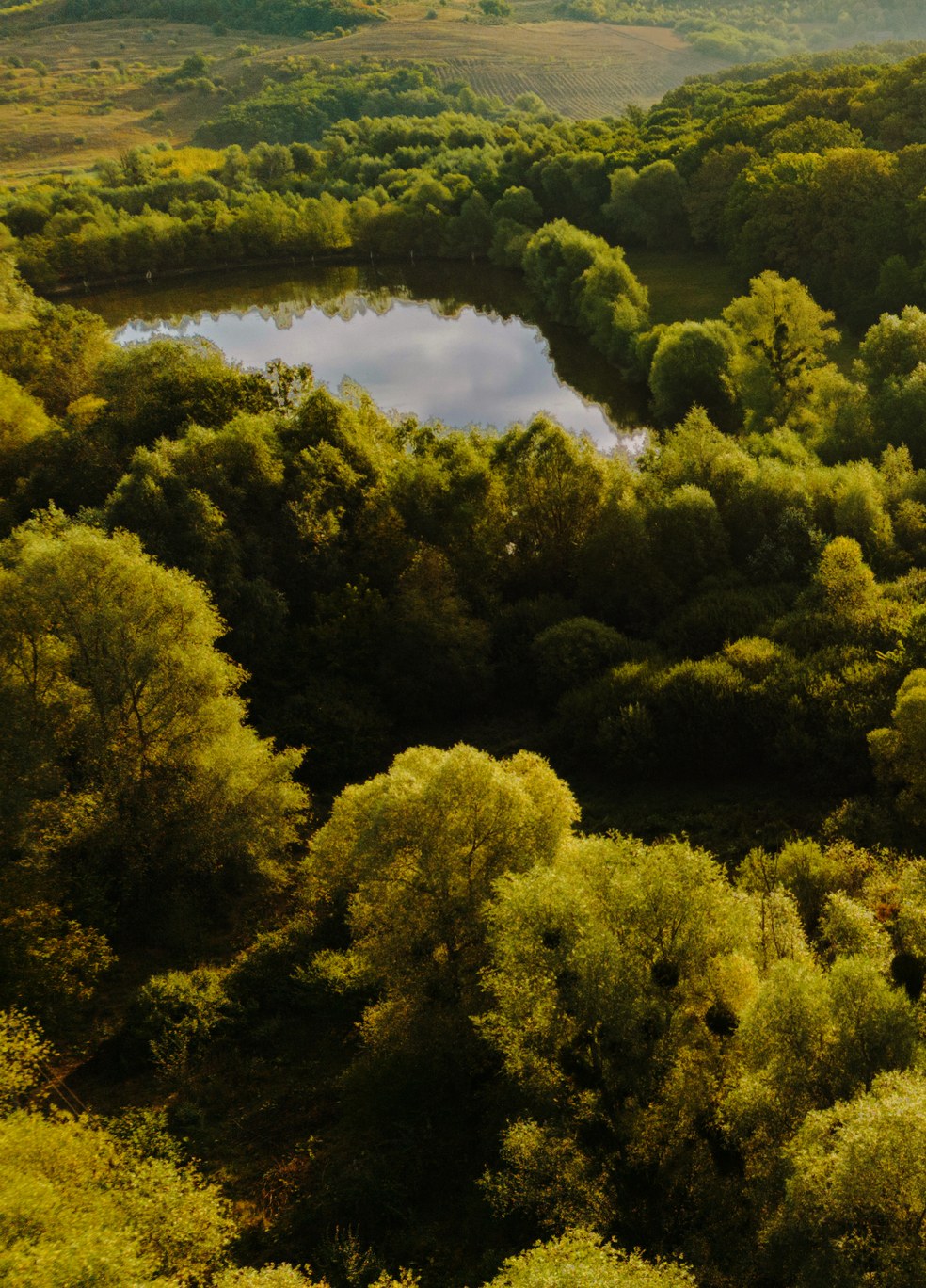
Podlasie is known as one of Poland's green lungs. No major industry sits within a hundred kilometers, no highways cut through it, and no transport corridor pushes exhaust into the air – just farmland, forest, and small villages that still heat with wood.

The soil helps too, and not in the way people expect. It's poor. Herbs grown in leaner ground push out less green mass, but what they do produce carries a higher concentration of the compounds that matter – the oils, the actives, the things a buyer is actually paying for. "I believe this region is particularly suitable for growing herbs primarily because the environment is exceptionally clean," Miroslaw says. "There are no major sources of pollution here, and the soil is also suitable."
Everything Still Done by Hand
Two sourcing channels feed the operation. At the center is Miroslaw's own sixty-five-hectare organic farm, where he's cultivated more than fifty plant species over the past thirty-five years. Wild-collected herbs come from nearly 200 additional species, gathered across roughly 40,000 hectares of certified forest in ongoing coordination with local forestry authorities to keep those populations healthy season after season.

Almost everything is cut by hand, with knives and sickles, by workers who know the plant well enough to leave behind what doesn't belong. A machine can't make that judgment call as it cuts everything in its path, at a cost paid later in sorting and lost quality. Hand-harvesting builds the selection into the very first step, and timing matters just as much: for the most delicate flowers, the harvest window can close in under an hour.
There's an older belief behind the practice, one Miroslaw doesn't dismiss even as a man who trusts science first. "It was once believed that, through manual work, a person placed part of their soul into the product," he says. "They believed this gave the herbs additional strength and energy."

From Field to Warehouse, Before It Ever Reaches Veyn
Harvesting is only the beginning. Drying happens slowly, at carefully controlled temperatures, to protect the aroma and compounds a harsher process would strip out. Some ingredients are freeze-dried instead, when that method serves the raw material better. Storage runs through warehouses built to hold temperature and humidity within a tight range, and every batch is tested afterward for purity, heavy metals, pesticide residue, and microbiological cleanliness. The results routinely come back below the detection threshold, not an exception worth noting once, but the baseline the operation holds itself to every time.
Klaudia, who manages the botanical collection alongside Miroslaw, puts it this way: "If I know that something is healthy, chemical-free, properly cultivated, harvested by hand and dried under good conditions, then I know I have the highest-quality raw material." She's candid about what that costs: "That is why the material may be more expensive, but its quality is completely different from industrially cultivated raw materials."
A Business That Gives Back What It Takes
That same care extends to the people behind it, not just the plants, and to what's taken from the land itself. For years, the operation has worked to reintroduce endangered plant species into places where they once grew and disappeared. "For many years, we have also tried to reintroduce endangered plants into natural areas where they once occurred but disappeared for various reasons," Miroslaw says. The farm also maintains a living collection of roughly 150 species considered increasingly rare in the wild, preserved here, he notes, "so that they can survive, at least in collections such as ours." Miroslaw traces the impulse back to something simpler than conservation policy: "When I was a child, I saw how older people behaved. They believed that when they received something freely from the forest or from nature – something they had neither planted nor cultivated – they should thank nature for it." As he puts it now, "we try to repay our debt to nature."

Herb gathering – walking forest and meadow to bring in wild raw material by hand – has nearly disappeared as a profession across Europe. Elderly gatherers still do it here: Klaudia describes men in their eighties who can spend an entire day collecting herbs in the forest before bringing in what they've found, work that supports entire families in a region with few other employment options.
Since the war in Ukraine began, the operation has also taken in people fleeing across the nearby border. "Because we are located close to Ukraine, a great number of people, especially women and mothers with children, fled the war during its first days," Miroslaw says. "At first, we took in more than a dozen women and children... Later, some of them stayed and began working with us. They also informed friends and neighbors that employment was available here." Many of them now work in herb harvesting. People with disabilities work here too, he adds, "especially in the production of the teas we make for you."
Klaudia frames the underlying instinct simply: "I want people to understand that human beings are necessary for all of this. We do it with our own hands." She also points to something increasingly rare: "I also think we may be the only company that legally gathers some of its raw materials from forests and natural habitats."

Composed With Intent
All of that care and sourcing still has to become something. None of the collection was assembled by guesswork. Selecting the compositions took Miroslaw several months of research, much of it pulled from old manuals and rare herbal texts rather than anything available today. "The information commonly available today, from recent books, the internet, or artificial intelligence, was not sufficient for me when developing these particular blends," he says. Every tea in the collection is built from an odd number of ingredients, and every one contains exactly seven – a number the oldest herbalists considered to have the strongest possible effect. Each blend is also built around a specific moment in the day: one to ease into the morning, one for focused work, one for time with people, one to wind down at night. At least one ingredient in every blend is chosen less for its measurable effect than for what herbalists call its "magical" function, a catalyst meant to sharpen everything else in the cup.

The same discipline governs the raw material long before it becomes a blend. After harvest, herbs are dried in dedicated drying chambers, then tested for moisture, a threshold that in most cases can't exceed 12 percent, alongside random microbiological testing. Material that arrives pre-dried from outside suppliers gets the same scrutiny: every batch is inspected on delivery, for both moisture and appearance. "The raw material used to produce the tea sticks is then carefully selected," says Gosia, one of Veyn's bouquet production experts. "Only the highest-quality raw material is chosen for production." Two points in the process matter most, she says: drying, since herbs left too moist risk mold while herbs overdried lose their appearance, and harvest timing, since herbs picked too late "may not look as good and may also contain lower levels of some of the active compounds we need." Storage is held to the same standard afterward: "Any deviation from the required temperature or humidity levels can have a negative effect on the raw material."
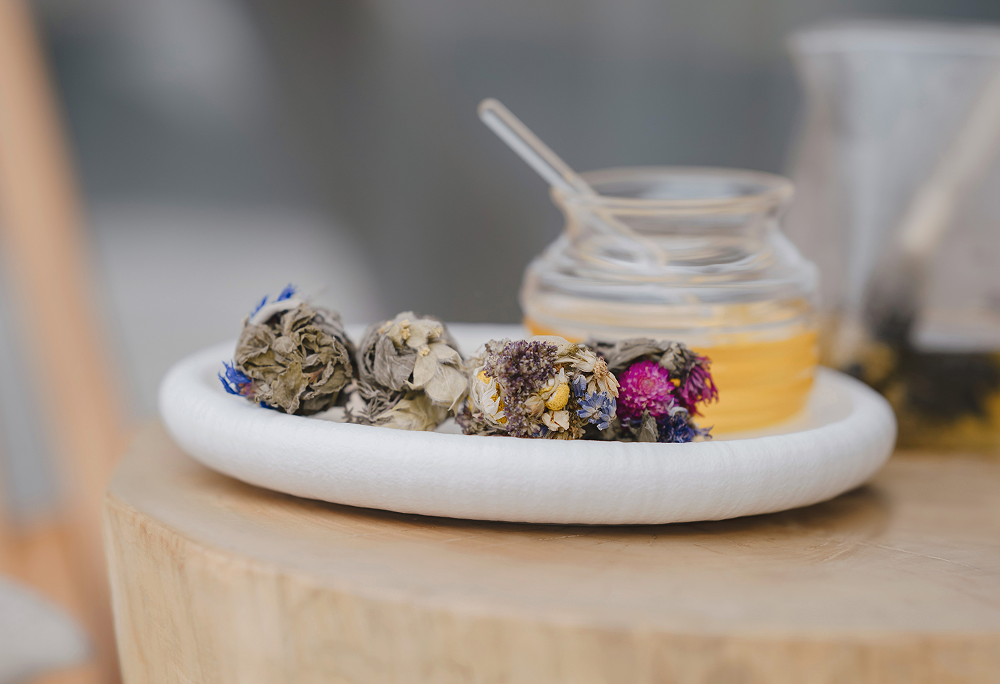
Only once material clears that bar does production begin. "Production of the tea sticks happens through the selection of chosen herbs, which the production team shapes into one piece using a reed tube," Gosia explains. "The sticks are then shaped into a specific form using special technology," where the herb finally takes its shape, and in a sense, its soul. Quality control happens again at packaging: "Products that deviate from our visual standards are rejected at the production stage," she adds.
Why It's Worth the Wait
Veyn doesn't ask its sourcing partner to change how it works. That's the point of the partnership, not a limitation of it. Every batch that goes into a Veyn blend can be traced back to a specific harvest, a specific method, and a specific round of testing: the kind of transparency that restaurants, hospitality buyers, and retailers increasingly need to be able to stand behind.
Miroslaw felt the weight of that reach when Veyn's teas landed on the menu of one of Chicago's most respected fine dining restaurants, Brindille. "Above all, I feel very proud," he says. "I never dreamed that I would have clients like that. I also believe that if consumers of these teas could see the conditions in which the plants grow, how they are harvested and how carefully everything is handled, they would be equally pleased to consume these products."
That's the offer Veyn makes to every partner: not a tea, but a supply chain that holds up to scrutiny at every stage, from a twelve-percent moisture reading on a single batch of dried herb to the reed tube shaping the final blend by hand. Every cup carries the region, the gatherers, the thirty-six years, and the plain fact that nothing in it was ever left to guesswork.